
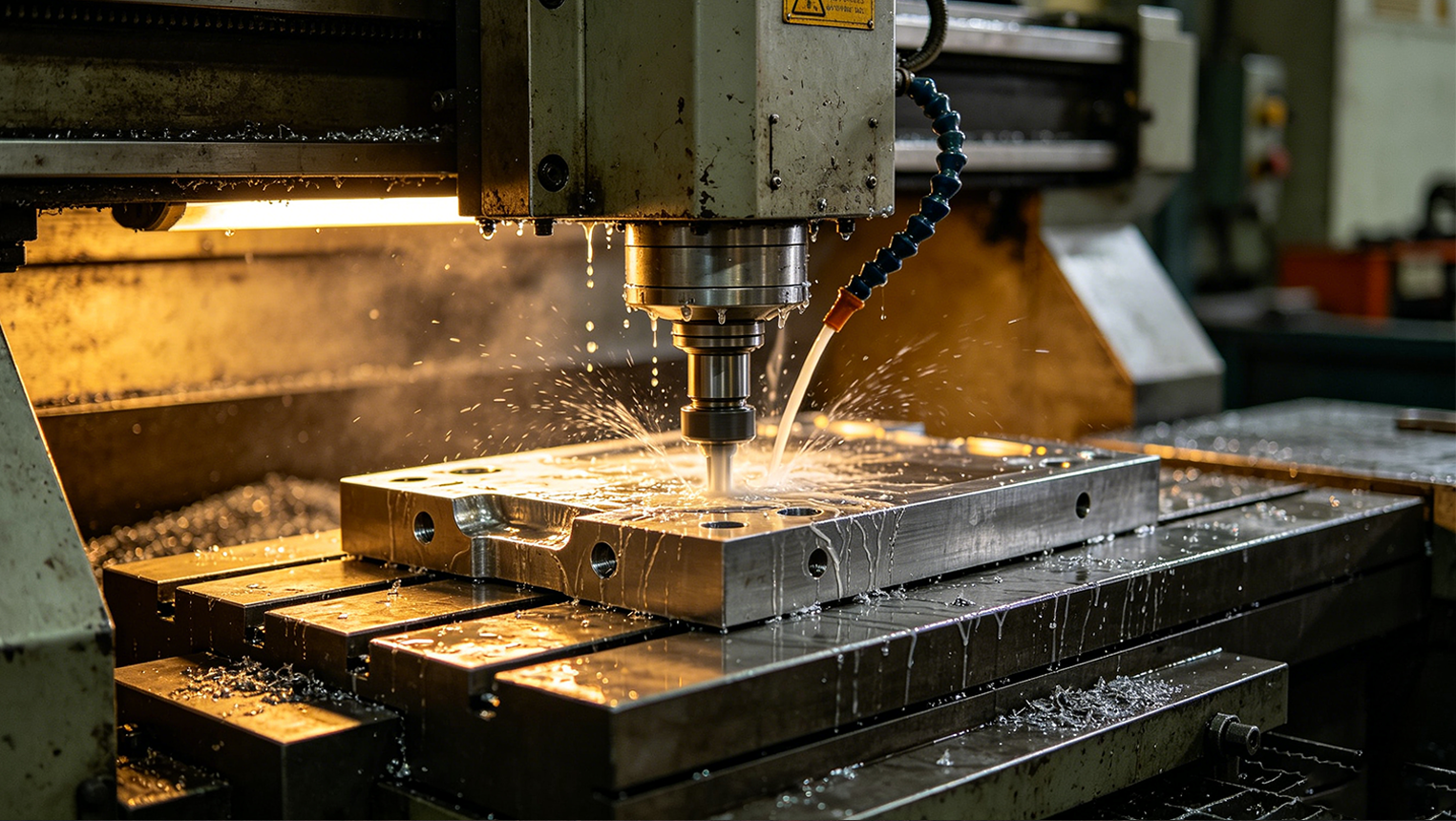
The global manufacturing industry is entering a new era defined by ultra-precision, intelligent automation, and complex geometries. In this transformation, five-axis CNC machining has become the core technology driving high-end production.
Once considered an advanced specialty process, five-axis machining is now a global standard for industries that demand extreme accuracy, high efficiency, and consistent quality. From aerospace components to medical devices and food machinery, this technology is reshaping how complex parts are designed and manufactured.
Why Five-Axis Machining Is Dominating 2026 Manufacturing
Unlike traditional 3-axis CNC systems, five-axis machining allows simultaneous movement across multiple axes. This enables:
- Single-setup machining for complex parts
- Reduced positioning errors
- Higher precision consistency
- Faster production cycles
- Ability to machine deep cavities and complex surfaces
In 2026, manufacturers are no longer asking whether to use five-axis machining—but how fast they can upgrade to it.
Ultra-Precision Manufacturing: The ±0.002mm Standard
In high-end industries, precision is no longer optional. It is a baseline requirement.
Modern five-axis CNC systems are now capable of:
- Tolerances as tight as ±0.002 mm
- Surface finishes down to Ra 0.1 μm
- Near-zero cumulative setup error
Why This Matters
Traditional machining requires multiple setups, each introducing small alignment errors. Five-axis machining eliminates this problem by completing the entire process in a single clamping.
This results in:
- Higher dimensional consistency
- Fewer defective parts
- Reduced handling damage
- Improved mass production stability
For industries like aerospace and medical equipment, even a micron-level deviation can cause system failure. Five-axis machining solves this critical challenge.
Efficiency Revolution: Faster Production, Lower Cost
Five-axis CNC machining is not just about precision—it is also about speed and cost efficiency.
Key Efficiency Gains:
- 50%–80% reduction in production time
- Fewer machine transfers
- Lower labor dependency
- Reduced fixture and setup costs
Real Impact
Complex components such as:
- Aerospace brackets
- Special-shaped nozzles
- High-precision mechanical housings
can now be completed in a single workflow instead of multiple machining stages.
This dramatically improves supply chain responsiveness, especially for export-driven manufacturers.
2026 Global Demand Trends for Five-Axis Machined Parts
As industries upgrade globally, demand for five-axis components is expanding rapidly across high-value sectors.
1. Food Machinery Industry
Strict hygiene regulations are driving demand for:
- Food-grade stainless steel screws
- Hygienic filling nozzles
- Contamination-free internal structures
Five-axis machining enables “no dead-angle” surfaces, preventing residue buildup and improving food safety compliance.
2. Aerospace Industry
Aerospace remains the most demanding application field.
Five-axis machining is essential for:
- Turbine blades
- Structural fuselage components
- High-stress alloy parts
These parts require extreme precision, heat resistance, and structural reliability.
3. Optical and Precision Instruments
Industries such as laser technology and telescopic systems require ultra-smooth surfaces and perfect alignment.
Common products include:
- Precision lens holders
- Optical adjustment brackets
- High-stability mounting components
Five-axis machining ensures defect-free geometry and superior surface finish, critical for optical performance.
4. Robotics and Automation Systems
The robotics industry relies heavily on lightweight, high-strength components.
Five-axis machining is used for:
- Robot structural frames
- Joint housings
- Internal wiring cavities
This improves:
- Structural rigidity
- Weight reduction
- Motion accuracy
Real-World Applications of Five-Axis CNC Technology
Case 1: Heat Dissipation Components in Germany
A European automation company struggled with deformation issues in complex heat sink structures.
Problem:
- High rejection rate due to thermal deformation
- Inconsistent machining results using 3-axis systems
Solution:
Switching to five-axis machining enabled continuous cutting paths and optimized chip removal.
Result:
- Zero deformation in final parts
- Stable mass production
- Improved thermal performance
Case 2: Robotics Structural Frame Optimization
A robotics manufacturer needed lightweight yet rigid frames for advanced robot systems.
Challenge:
- Complex internal cavities for wiring and sensors
- High structural strength requirements
Solution:
Five-axis CNC machining produced the entire frame in a single setup.
Outcome:
- Reduced overall robot weight
- Improved battery efficiency
- Higher sensor alignment accuracy
The Three Pillars of Competitive Five-Axis Manufacturing
In 2026, global buyers evaluate suppliers based on more than just machining capability.
1. Advanced Technology
Manufacturers must continuously upgrade:
- 5-axis CNC systems
- CAM programming capability
- Tool path optimization
2. Quality Certification
International trust depends on compliance with:
- ISO quality systems
- Process traceability
- Consistent inspection standards
3. Engineering Service Capability
Modern buyers expect:
- Rapid prototyping support
- Design optimization suggestions
- Engineering communication efficiency
Why Five-Axis Machining Is a Strategic Advantage
Companies adopting five-axis CNC technology gain:
- Stronger global competitiveness
- Lower long-term production cost
- Higher product reliability
- Faster market response
- Improved customer satisfaction
In today’s global supply chain, precision manufacturing capability is not just an advantage—it is a survival requirement.
Conclusion
Five-axis CNC machining has evolved into the backbone of modern high-end manufacturing. Its ability to combine ultra-precision, high efficiency, and complex geometry processing makes it indispensable across aerospace, robotics, medical, and industrial sectors.
As we move deeper into 2026, the companies that invest in advanced five-axis capabilities, strict quality systems, and engineering-driven services will define the next generation of global manufacturing leadership.


