
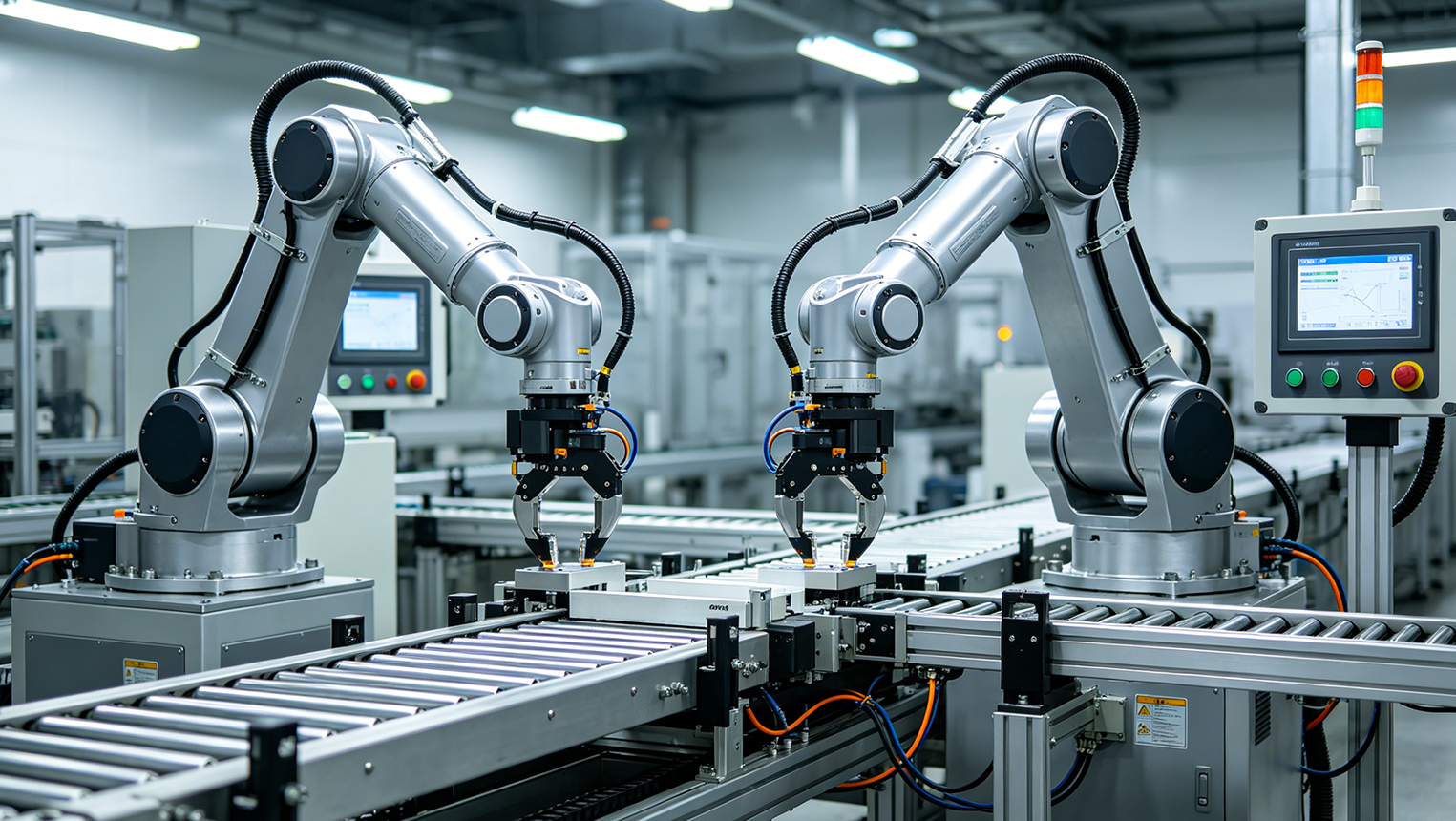
Many factories today ask a simple question: automation equipment vs traditional machinery— which one is better?
Both options are still used in manufacturing. However, they work in very different ways. Traditional machines rely more on people. Automation equipment uses smart systems to control production.
In this article, we will compare them in a clear and simple way. We will also show how Xhiontech supports modern factories with advanced manufacturing solutions.
Automation Equipment vs Traditional Machinery in Production Speed
First, let’s talk about speed.
Traditional machinery depends on manual work. Workers must control the machine step by step. Because of this, production is often slower.
In contrast, automation equipment works automatically. It follows a program and runs continuously. It does not get tired. It also does not need many breaks.
As a result, factories can produce more parts in less time. In addition, production becomes more stable and predictable.
Automation Equipment vs Traditional Machinery in Product Quality
Next, we look at quality.
Traditional machines can produce good parts. However, results may change depending on the operator. Small human errors can affect the final product.
Automation equipment reduces this problem. It follows exact instructions every time. Therefore, it produces more consistent results.
For example, Xhiontech provides precision machining solutions such as:
- 5-axis CNC machining parts
- High-precision custom components
- Complex surface machining
- Micro-structure processing parts
These solutions help industries like automotive, electronics, medical devices, and automation systems. They improve accuracy and reduce defects.
Automation Equipment vs Traditional Machinery in Cost Control
At first, traditional machinery looks cheaper. It costs less to buy and set up.
However, it often needs more workers. It may also create more waste and errors. Over time, these costs increase.
Automation equipment costs more at the beginning. But it saves money later. It reduces labor needs and lowers waste.
So, in the long run, automation is often more cost-effective.
Automation Equipment vs Traditional Machinery in Flexibility
Traditional machines are less flexible. They are usually built for one task. If production changes, adjustment takes time.
Automation equipment is more flexible. It can be reprogrammed quickly. It can also support different product types.
For example, Xhiontech helps factories handle different production needs. Their systems support custom machining and complex designs. This makes it easier for companies to adapt to new orders.
How Xhiontech Supports Modern Automation Manufacturing
Today, many factories move toward smart production. Xhiontech plays an important role in this shift.
Xhiontech focuses on:
- High-precision CNC machining
- Complex part manufacturing
- Stable batch production
- Automation-ready component design
These solutions help factories work faster and more accurately. They also help reduce human error and improve consistency.
Because of this, many industries now choose automation systems instead of traditional machines.
Automation Equipment vs Traditional Machinery: Simple Comparison
Let’s make it simple:
Traditional machinery:
- Lower starting cost
- Needs more manual work
- Slower production
- More variation in quality
Automation equipment:
- Higher starting cost
- Less manual work
- Faster production
- More stable quality
So, both have value. But they serve different needs.
Conclusion: Which One Should You Choose?
So, automation equipment vs traditional machinery—which is better?
It depends on your factory goals.
If you need small production and low cost, traditional machines still work. But if you want speed, accuracy, and long-term savings, automation equipment is the better choice.
With support from companies like Xhiontech, factories can move toward smarter and more efficient production systems.
In the future, automation will become more common. It will not replace all traditional machines, but it will lead modern manufacturing forward.


