
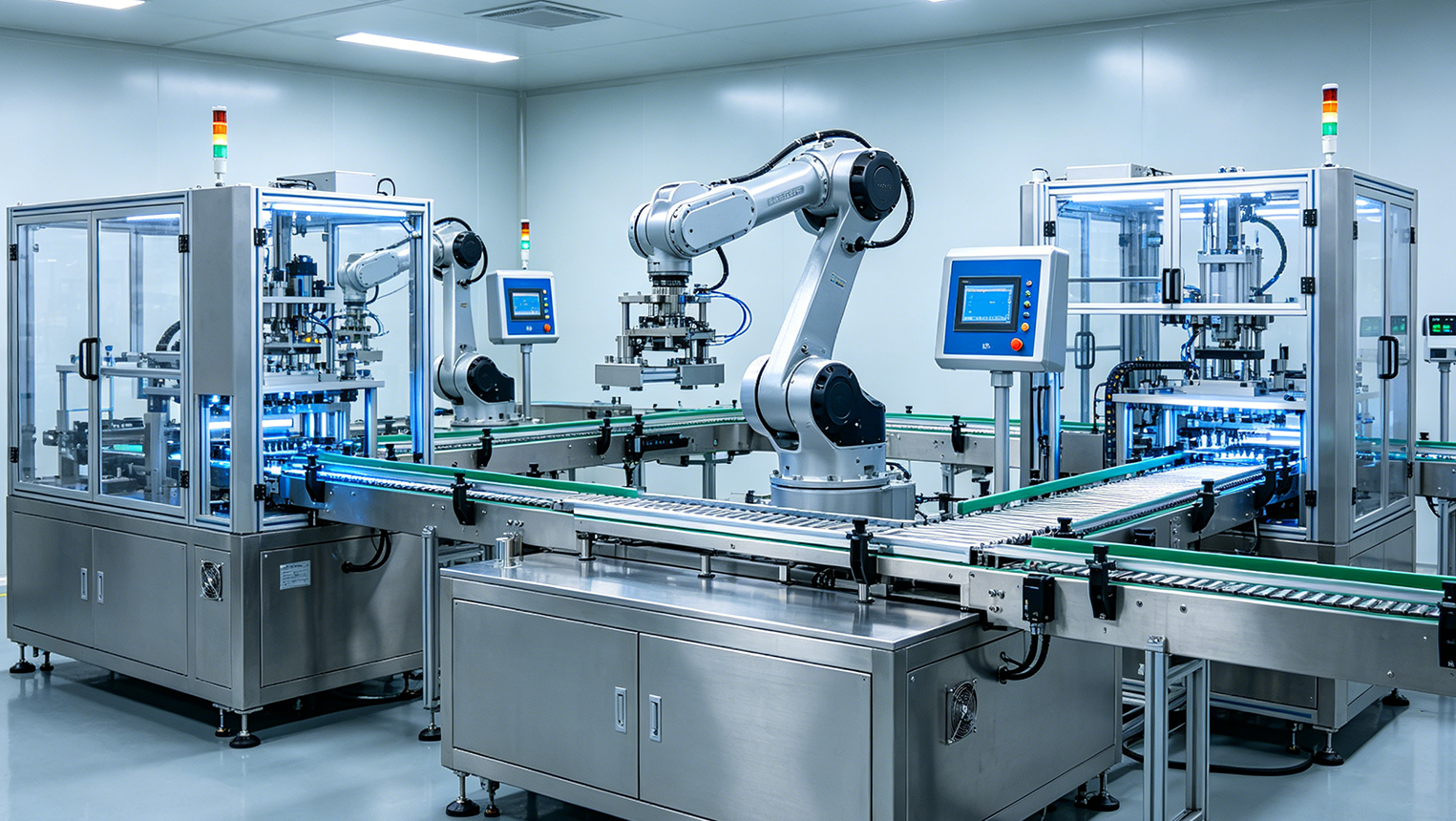
Factories today look very different from fifty years ago. Machines now do work that people used to do. These machines are called automation equipment. They run with little or no human help. This guide answers two questions. First, what is automation equipment? Second, how does it work? We will also look at how Xhiontech provides precision parts for automation. You can visit them at www.xhiontech.com. Let us begin.
What Is Automation Equipment? A Clear Definition
Automation equipment is any machine that performs tasks automatically. It follows programmed instructions. It does not need a person to control it every moment. As a result, it saves time and reduces errors.
For example, a simple automatic door opens when someone approaches. A complex robotic arm on a car assembly line welds frames without a break. Both are automation equipment. The only difference is complexity.
Three core ideas explain how automation works. First, the machine senses its environment. Second, it makes decisions based on rules. Third, it takes action. This cycle repeats continuously.
Xhiontech supports this industry by making high precision 5 axis CNC machined parts. These parts go into robotics, automation systems, and industrial machinery.
The Basic Components of Automation Equipment
All automation equipment shares the same building blocks. Understanding these parts helps explain how automation works.
Sensors are the eyes and ears of the machine. They detect heat, light, pressure, distance, or movement. For example, a sensor tells a robotic arm when a part is in place.
The controller is the brain. It processes information from the sensors. It then decides what to do. Most controllers are programmable logic controllers or computers.
Actuators are the muscles. They convert the controller decision into physical action. Motors, cylinders, and relays are common actuators.
The mechanical structure is the body. It holds everything together. It includes frames, guides, bearings, and linkages. Xhiontech produces high rigidity components like linear guide rails and machine platforms for this purpose.
The power supply provides electricity, compressed air, or hydraulic pressure. Without power, nothing moves.
How Automation Equipment Works Step by Step
Now let us walk through how a typical automated machine works.
First, sensing. A sensor detects a trigger. For a printing machine, the trigger might be a sheet of paper entering the printer. The sensor sends a signal to the controller.
Second, processing. The controller reads the signal. It checks its programmed rules. It then sends a command to the actuator. All of this happens in milliseconds.
Third, action. The actuator moves. A motor turns. A cylinder extends. A gripper closes. The machine performs its task, such as moving a print head or folding a box.
Fourth, feedback. Another sensor checks that the action happened correctly. If the action failed, the controller may try again or stop the machine.
Fifth, repeat. The cycle starts over. This loop runs thousands or millions of times. As a result, automation equipment can work 24 hours a day.
Types of Automation Equipment
Automation comes in different forms. Each suits different needs.
Fixed automation performs one task repeatedly. It is hard to change. Examples include car engine assembly lines and bottling plants. Fixed automation is fast and efficient for high volumes.
Programmable automation can be reprogrammed for different tasks. However, changeover takes time. Examples include CNC machining centers and industrial robots used for batch production.
Flexible automation changes tasks quickly without stopping production. It is the most advanced. Examples include modern robotic cells and automated guided vehicles.
Integrated automation connects multiple machines into one system. Computers coordinate the whole factory floor. This is often called a lights out factory because it can run without human presence.
Xhiontech serves all these types. Their 5 axis CNC machined parts go into programmable and flexible automation systems. Their precision components ensure smooth operation.
Sensors. The Eyes of Automation Equipment
Sensors deserve a deeper look. Without good sensors, automation equipment is blind.
Proximity sensors detect when an object is near. They work without touching the object. Common uses include counting parts on a conveyor belt.
Photoelectric sensors use light beams. When an object breaks the beam, the sensor sends a signal. They are used for positioning and safety.
Pressure sensors measure force or weight. They ensure that a gripper does not squeeze too hard or too soft.
Temperature sensors monitor heat. They protect machines from overheating. They also ensure proper conditions for processes like welding.
Vision sensors are small cameras with built in processors. They can read barcodes, check part orientation, or inspect for defects.
Controllers. The Brain of Automation Equipment
The controller is the most important part. It runs the program that tells the machine what to do.
PLCs or Programmable Logic Controllers are rugged computers designed for factories. They handle many inputs and outputs. They are reliable and easy to program. Most automation equipment uses PLCs.
Microcontrollers are small, cheap computers. They are found in simple automation like automatic doors or coffee vending machines.
Industrial PCs are full computers in rugged cases. They run complex software. They are used for vision systems and data analysis.
The controller program is called logic. It consists of IF THEN rules. For example, if the sensor detects a part, then move the arm forward. These simple rules combine to create complex behavior.
Actuators. The Muscles of Automation Equipment
Actuators turn decisions into motion. Without them, the machine would sense and think but never act.
Electric motors are the most common actuators. Servo motors provide precise position control. Stepper motors move in small fixed steps. AC motors run at constant speed.
Pneumatic cylinders use compressed air. They move in a straight line. They are fast and cheap. However, they are less precise than electric actuators.
Hydraulic cylinders use pressurized oil. They provide very high force. They are used in heavy equipment like presses and excavators.
Solenoids are simple electromagnetic switches. They open and close valves or push small levers.
Xhiontech produces components for all these actuators. Their high precision machined parts ensure smooth, accurate movement.
How Precision Parts Make Automation Work
Automation equipment is only as good as its parts. Loose or poorly made parts cause vibration, noise, and errors. Therefore, precision matters.
Precision means a part matches its design within a very small tolerance. For example, a shaft might be 10 millimeters plus or minus 0.005 millimeters. That is about one tenth the thickness of a human hair.
How is precision achieved? Five axis CNC machining is one method. The machine cuts from multiple angles in one setup. This reduces errors. Xhiontech specializes in this technology.
What parts need the highest precision? Linear guide rails, printing machine platforms, and measuring machine parts all require tight tolerances. Xhiontech produces these components for the automation industry.
Without precision parts, even the best program will fail.
Xhiontech Role in Automation Equipment
Xhiontech does not build complete automation equipment. Instead, they make the critical parts that go inside the machines. Their specialty is high precision 5 axis CNC machining and non standard custom parts.
Who they serve. Automotive, robotics, automation, and industrial machinery sectors. They have long term partnerships with well known manufacturers.
What they offer. One stop solutions covering prototyping, small batch, and mass production. They also provide precision casting, powder metallurgy, cold forging, 3D printing, and surface treatment.
How they ensure quality. Advanced multi axis CNC equipment. Full precision testing facilities. Rigorous quality control at every stage.
Examples of their parts include desktop 5 axis machined parts for complex structures, printing machine platforms with high rigidity and flatness, linear guide rails for accurate quiet operation, and components for image and contact measuring machines.
For more details, visit www.xhiontech.com. They welcome global clients for factory visits.
Benefits of Automation Equipment for Businesses
Now let us look at why businesses use automation.
Higher output. Machines work faster than people. They do not take breaks. They do not get tired. A single automated machine can replace several workers.
Consistent quality. Machines do the same task the same way every time. They do not have bad days. As a result, product quality is uniform.
Lower cost per part. Although automation equipment costs money upfront, it saves money over time. Lower labor costs, less waste, and fewer defects.
Safer work conditions. Dangerous tasks are given to machines. People are moved to safer roles. This reduces workplace injuries.
Twenty four seven operation. Automation equipment can run all day and all night. This allows faster delivery times.
Examples of Automation Equipment in Action
Let us look at real world examples.
On an automotive assembly line, robotic arms weld car bodies. They use vision sensors to find exact positions. Controllers coordinate dozens of robots. The result is a car welded perfectly every minute.
In a printing machine, automated equipment feeds paper, applies ink, and stacks finished pages. Xhiontech makes the printing machine platform and linear guide rails for these machines.
In medical bed manufacturing, automated CNC machines cut and shape bed frames. Xhiontech produces high precision medical bed parts that meet strict medical standards.
In an image measuring machine, the equipment inspects other parts for defects. Xhiontech makes the precision components that allow accurate measurement.
Common Misconceptions About Automation Equipment
Many people misunderstand automation. Here are some common myths.
Myth one. Automation means no human workers. In reality, automation changes jobs but does not eliminate them. People are still needed to design, program, maintain, and repair the equipment.
Myth two. Automation is only for large factories. Small shops can benefit too. Desktop 5 axis machines and collaborative robots are affordable for small businesses.
Myth three. Automation is too complex to learn. Modern automation equipment uses user friendly software. Many systems can be programmed with simple block diagrams, not complex code.
Myth four. All automation parts are the same. This is false. Precision parts from quality suppliers like Xhiontech perform better and last longer than cheap alternatives.
Future Trends in Automation Equipment
The field is changing fast. Here is what is coming.
AI and machine learning. Controllers will learn from data. They will adjust their own programs to improve performance. This reduces the need for human programming.
Collaborative robots. These robots work safely next to people. They have force sensors that stop movement if they touch someone. They are easier to program than industrial robots.
Digital twins. A digital twin is a computer simulation of the real automation equipment. Engineers test changes on the digital twin first. Then they apply them to the real machine. This reduces downtime.
Energy efficient designs. New motors and drives use less electricity. This lowers operating costs and helps the environment.
How to Get Started with Automation Equipment
If you are considering automation, follow these steps.
First, identify a repetitive task. Look for a task that is the same every time. This is the best candidate for automation.
Second, measure the current process. How long does it take? What is the error rate? What does it cost? This data will help you evaluate automation benefits.
Third, research equipment options. Fixed automation for high volume. Flexible automation for varied products. Start small if you are new to automation.
Fourth, find a precision parts supplier. Automation equipment needs high quality components. Xhiontech provides 5 axis CNC machined parts for this purpose.
Fifth, plan for maintenance. Automation equipment needs regular care. Budget for spare parts and trained technicians.
Final Summary
Automation equipment is machines that perform tasks automatically. They work by sensing their environment, processing information, and taking action. This cycle repeats quickly and continuously.
The equipment relies on three core components. Sensors act as eyes. Controllers act as brains. Actuators act as muscles. Precision parts from suppliers like Xhiontech ensure that all components fit and move correctly.
Automation offers many benefits including higher output, consistent quality, lower costs, and safer work conditions. It is used across automotive, electronics, medical, and printing industries.
As technology advances, automation will become smarter and more accessible. Small businesses will benefit alongside large factories. The key is to start with a clear goal and quality components.
For high precision parts that make automation work, visit www.xhiontech.com. Xhiontech offers 5 axis CNC machining, custom parts, and one stop solutions from prototyping to mass production. Request a quote for your next automation project.


