
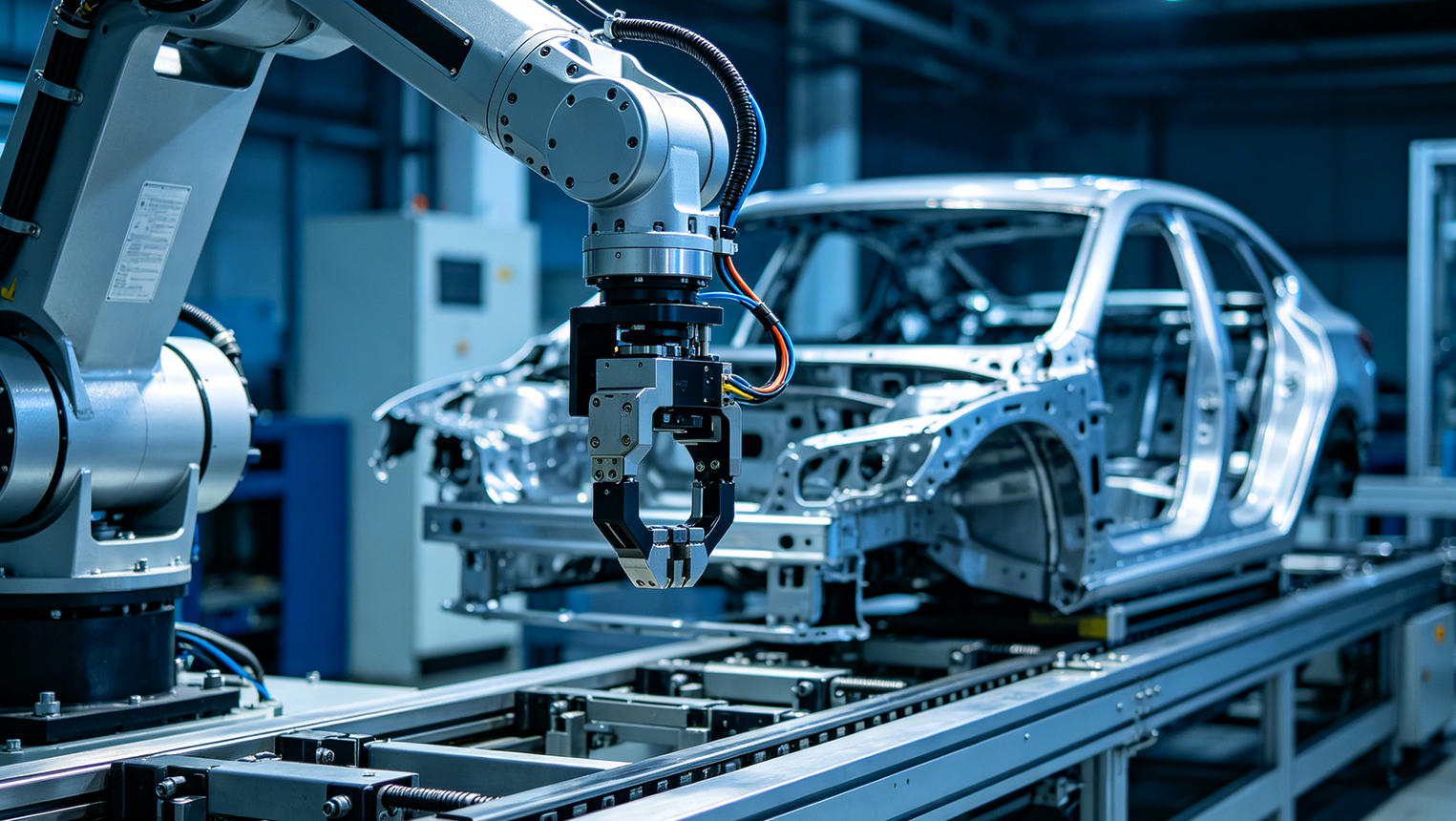
Factories today need speed and accuracy. Off-the-shelf parts often do not fit. That is why many companies turn to custom automation equipment for automotive and electronic industries. These parts are made to exact specifications. They improve production lines. They also reduce downtime.
This guide explains what to look for in a custom parts supplier. It also highlights solutions from Xhiontech. You can see their work at www.xhiontech.com. Let us begin.
Why Custom Automation Equipment Matters for Automotive and Electronic Industries
Standard parts have limits. They may not fit your unique machines. They may wear out faster than expected. They may cause production delays. Therefore, custom automation equipment for automotive and electronic industries solves these problems.
For the automotive sector, custom parts handle high speeds and heavy loads. For the electronic sector, they demand extreme precision and cleanliness. A single faulty part can ruin thousands of products. As a result, quality and accuracy are non-negotiable.
Xhiontech specializes in high-precision 5-axis CNC machining. They serve automotive, robotics, automation, and industrial machinery sectors. Their parts meet tight tolerances and strict quality standards.
Key Technologies Behind Custom Automation Equipment
Several manufacturing technologies produce custom automation parts. Each has its strengths.
5-axis CNC machining. This is the gold standard for complex shapes. The machine moves a tool along five different axes at once. As a result, it can cut undercuts, angled surfaces, and intricate geometries. Xhiontech uses advanced multi-axis CNC equipment for this purpose.
Precision casting. Molten metal is poured into a mold. This method works well for medium to high volumes. It produces strong, dense parts.
Powder metallurgy. Metal powder is pressed and heated to form a solid part. This method wastes very little material. It is good for small, complex parts.
Cold forging. Metal is shaped at room temperature under high pressure. This makes the metal stronger. It is ideal for high-strength automotive parts.
3D printing. Layers of material are built up to form a part. This is best for prototypes or very small batches. It allows shapes that machining cannot achieve.
Xhiontech offers all these services. They also provide surface treatment and heat treatment. Therefore, they are a one-stop shop for custom automation equipment for automotive and electronic industries.
Precision Machining for Automotive Applications
The automotive industry demands durability. A part that fails on the road can cause accidents. Therefore, automotive components must pass strict tests.
Common automotive automation parts. Engine components, transmission parts, sensor housings, brake system parts, and robotic assembly line components.
Material choices. Steel, aluminum, brass, and engineering plastics. Each material offers different strength, weight, and cost trade-offs.
Tolerance requirements. Most automotive parts require tolerances of 0.01 to 0.05 millimeters. Some critical parts need even tighter control.
Xhiontech has long-term partnerships with automotive manufacturers. Their 5-axis machined parts handle complex structures and multi-angle surfaces. As a result, they meet the high demands of car makers.
Precision Machining for Electronic Applications
The electronics industry needs a different set of qualities. Parts must be clean. They must not generate static. They must fit in very small spaces.
Common electronic automation parts. Pick-and-place machine components, test fixture parts, conveyor system guides, sensor mounts, and cleanroom equipment parts.
Material choices. Aluminum, engineering plastics like PEEK and acetal, and stainless steel. Plastics are often chosen to avoid scratching delicate electronic components.
Tolerance requirements. Electronic parts often need tolerances of 0.005 to 0.01 millimeters. Some micro components need even tighter control.
Xhiontech produces micro components for electronics applications. Their desktop 5-axis machined parts are ideal for small, precise parts. Tight tolerances and excellent surface finish are standard.
Non-Standard Customization for Unique Needs
No two factories are exactly alike. Therefore, standard parts often need modification. Non-standard customization means making parts to your exact drawings.
When do you need non-standard parts? Your machine is older and parts are no longer made. Your production line has a unique layout. You are prototyping a new machine. You need to improve an existing part that fails too often.
What information does the supplier need? 3D CAD files in STEP or IGES format. 2D drawings with dimensions and tolerances. Material specification. Quantity needed. Desired lead time.
Xhiontech specializes in non-standard custom parts. They work with various metals and engineering plastics. They also offer prototyping, small-batch, and mass production. Therefore, they can handle any order size.
Quality Control for Custom Automation Equipment
Quality control separates good suppliers from bad ones. A part that looks fine may fail early if it was made poorly. Therefore, you need to understand how a supplier checks quality.
In-process inspection. Parts are checked during production, not just at the end. This catches mistakes early. Xhiontech uses rigorous quality control at every stage.
Final inspection with precision tools. CMM (coordinate measuring machines) check dimensions. Optical comparators check complex shapes. Surface roughness testers check finish quality.
Material certification. The supplier should provide mill test reports. These confirm the metal or plastic meets the required grade.
Tolerance verification. For critical dimensions, the supplier should provide measurement reports. These show exactly how each part measured against the drawing.
Xhiontech features full precision testing facilities. They deliver high-precision, reliable products with efficient lead times. As a result, their parts perform consistently.
Case Study. Image Measuring Machine Parts
Image measuring machines need extremely stable parts. Any flex or movement ruins the measurement. Therefore, the parts must have superior flatness, straightness, and dimensional accuracy.
Xhiontech produces high-precision components for these machines. They use CNC machining and rigorous quality control. The materials are chosen for stability. The result is steady performance and precise measurement.
These parts also offer long service life. They work well with optical and vision measuring equipment. Custom processing is available for unique machine designs.
For more examples, visit www.xhiontech.com. They share application cases and customer success stories.
Case Study. Linear Guide Rails for Printing Machines
Printing machines need smooth, quiet motion. Linear guide rails guide the print head across the page. If the rails are rough or uneven, print quality suffers.
Xhiontech produces precision linear guide rails for printers. These rails are rigid, wear-resistant, and low-friction. They ensure accurate, quiet operation. Moreover, they fit most printing machines.
The same technology applies to automation equipment in electronics and automotive factories. Smooth motion means faster cycle times and fewer errors.
Surface and Heat Treatment Services
Raw machined parts are not always ready to use. They may need additional treatments to perform well.
Surface treatments. Anodizing for aluminum parts adds wear resistance. Plating adds corrosion protection. Polishing improves appearance and cleanliness. Powder coating adds a durable colored finish.
Heat treatments. Annealing softens metal for easier machining. Hardening increases strength and wear resistance. Tempering reduces brittleness after hardening.
Xhiontech integrates these services into their one-stop solution. Therefore, you receive finished, ready-to-install parts. No need to send parts to another shop.
Prototyping vs. Mass Production
Different projects need different approaches. A prototype proves a design works. Mass production makes thousands of identical parts.
Prototyping. Small quantity, typically 1 to 50 pieces. Faster lead time, often 1 to 3 weeks. Higher cost per piece. Changes are easy and cheap.
Mass production. Large quantity, often 1,000 to 100,000 pieces. Longer lead time for tooling. Lower cost per piece. Changes are expensive and slow.
Xhiontech offers both prototyping and mass production. They also offer small-batch production for medium quantities. This flexibility is valuable for custom automation equipment for automotive and electronic industries.
How to Choose a Supplier for Custom Automation Equipment
Choosing the right supplier saves time and money. Use this checklist.
Check their equipment. Do they have 5-axis CNC machines? Multi-axis equipment is necessary for complex parts.
Ask about materials. Can they work with your required metals and plastics? Do they have material certifications?
Review their quality process. Do they inspect during production or only at the end? Do they provide measurement reports?
Request samples. A good supplier will make test parts. You can check the quality before placing a large order.
Check their lead times. Can they meet your production schedule? Do they offer rush services?
Xhiontech meets all these criteria. They feature advanced multi-axis CNC equipment. They work with various metals and engineering plastics. They maintain rigorous quality control. And they offer efficient lead times.
Common Mistakes When Ordering Custom Parts
Avoid these errors. They cost time and money.
Incomplete drawings. Missing dimensions or tolerances force the supplier to guess. Guesses lead to wrong parts.
Wrong material choice. A material that works for a prototype may fail in production. Understand the operating environment.
No tolerance specification. If you do not specify tolerances, the supplier uses their standard. Standard may be too loose for your needs.
Last-minute orders. Custom machining takes time. Rushing increases cost and risk of errors.
Cheapest supplier only. Low price often means low quality. Poor parts cause downtime and rework. The total cost is higher.
Xhiontech helps customers avoid these mistakes. Their engineering team reviews drawings before production. They suggest better materials or tolerances when needed.
Future Trends in Automation Equipment
Automation is changing fast. New technologies are reshaping the industry.
AI in machining. Artificial intelligence optimizes tool paths. This reduces cycle times and improves surface finish.
Digital factories. Machines connect to networks. Production data is tracked in real time. Problems are found and fixed faster.
Energy-saving equipment. New motors and drives use less electricity. This lowers operating costs and carbon footprint.
More robotics. Robots are doing more tasks on assembly lines. This increases demand for custom robotic components.
Xhiontech stays current with these trends. They publish news and insights on their website. For example, they have articles on industrial automation trends and energy-saving equipment.
Final Recommendations
Custom automation equipment for automotive and electronic industries is essential for modern manufacturing. It improves quality, speed, and reliability. Therefore, choosing the right supplier is a strategic decision.
Look for a supplier with 5-axis CNC machining, multiple material options, rigorous quality control, and fast lead times. Xhiontech offers all these features. Their services include prototyping, small-batch, and mass production. They also provide surface and heat treatment.
Visit www.xhiontech.com to learn more. Request a quote for your next project. Send your drawings and specifications. Receive precision parts that fit your machines perfectly. Your production line will run smoother. Your products will meet higher standards. And your customers will notice the difference.


