
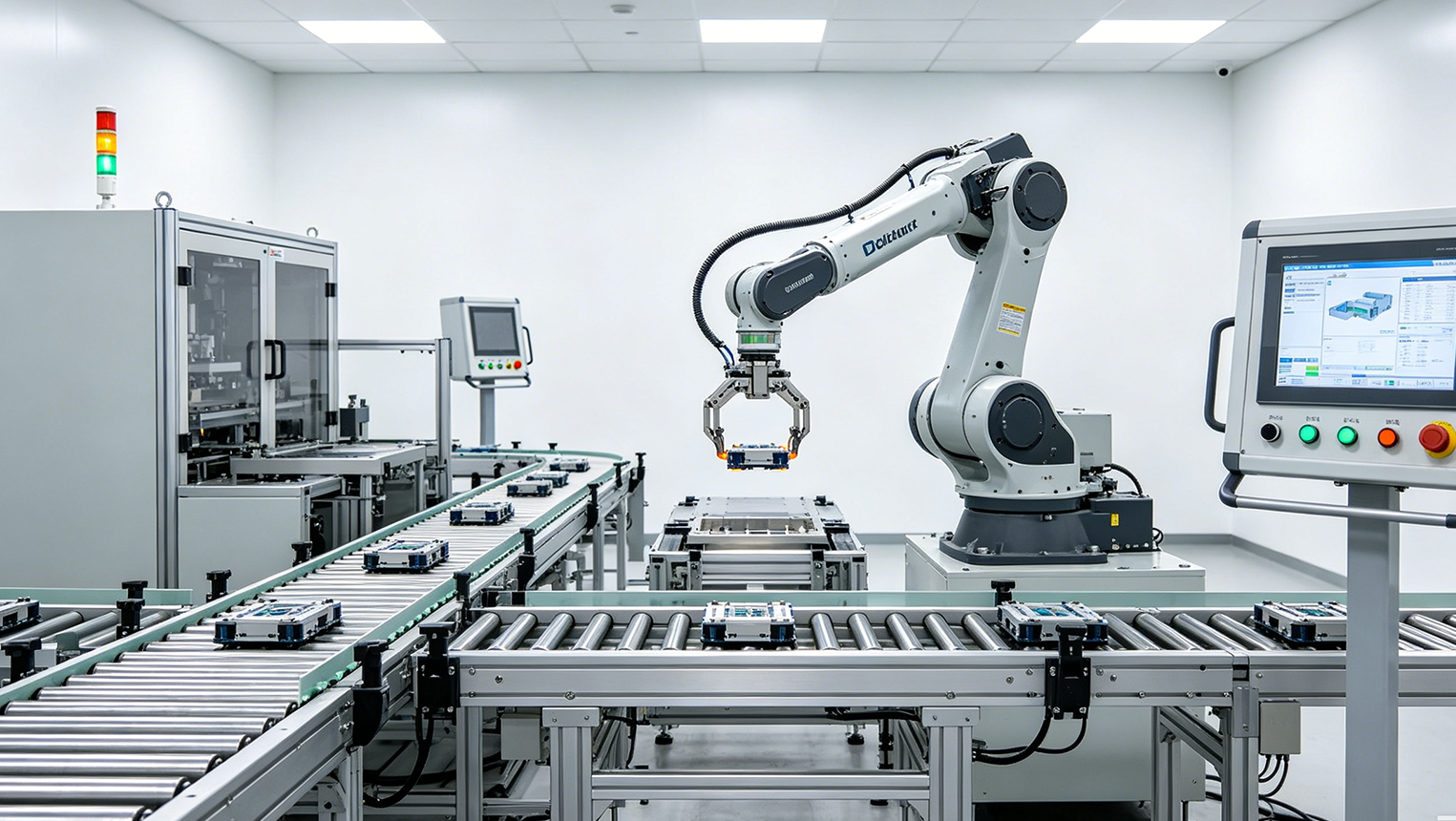
In today’s fast-moving manufacturing world, factories need higher speed, better quality, and lower costs. Because of this, more companies are investing in automation equipment. A good automation system can improve production efficiency, reduce labor costs, and increase product consistency.
However, choosing the right automation equipment is not always easy. Different factories have different production goals, budgets, and product types. So, it is important to understand your needs before making a decision.
In this automation equipment guide, you will learn how to choose the best automation system for your factory and how xhiontech can help with professional automation solutions.
What Is Automation Equipment in Modern Factories?
Automation equipment refers to machines and systems that can complete production tasks with less human work. These systems use software, sensors, robots, motors, and control devices to improve manufacturing processes.
Today, automation equipment is widely used in industries such as:
- Automotive manufacturing
- Electronics production
- Medical devices
- Packaging industries
- Precision machining
- Semiconductor manufacturing
Factory automation systems can include:
- Automated assembly lines
- CNC machines
- Conveyor systems
- Robotic arms
- Industrial control systems
- Precision automation components
As factories continue to move toward smart manufacturing, automation equipment has become a key part of industrial growth.
Why Automation Equipment Is Important for Factory Efficiency
Automation systems bring many advantages to factories. First, they help increase production speed. Machines can work continuously without frequent breaks, which improves output.
Second, automation equipment helps reduce production errors. Since machines follow programmed instructions, product quality becomes more stable and consistent.
Other important benefits include:
Lower Labor Costs with Automation Systems
Automation can reduce the need for manual labor in repetitive tasks. As a result, factories can save labor costs while improving productivity.
Better Product Quality Through Factory Automation
Automated systems improve accuracy and reduce mistakes during production. This is especially important for industries that require high precision.
Improved Workplace Safety with Industrial Automation Equipment
Some manufacturing jobs involve heavy lifting, high temperatures, or dangerous environments. Automation equipment can reduce worker risks and improve factory safety.
Faster Production and Delivery
With automated production lines, factories can complete orders faster and improve customer satisfaction.
How to Choose the Right Automation Equipment for Your Factory
Choosing the right automation system requires careful planning. Below are some key factors you should consider before buying automation equipment.
Understand Your Factory Production Needs
First, you should clearly understand your production goals. Ask yourself questions such as:
- What products are you manufacturing?
- What production problems do you want to solve?
- Do you need higher speed or better accuracy?
- What level of automation does your factory need?
For example, a factory producing precision electronic components may need high-accuracy CNC automation systems. Meanwhile, packaging factories may focus more on conveyor and robotic automation.
Consider the Scalability of the Automation System
Your factory may grow in the future. Therefore, it is important to choose automation equipment that can expand with your business.
Flexible automation systems allow you to add new machines, software, or production lines later. This can save future upgrade costs.
Evaluate Automation Equipment Quality and Reliability
Reliable automation equipment helps avoid downtime and maintenance problems. Before choosing a supplier, check:
- Manufacturing experience
- Technical support services
- Product certifications
- Customer reviews
- Equipment lifespan
High-quality automation systems may cost more at first, but they often reduce long-term maintenance costs.
Compare Automation System Costs and Return on Investment
Price is important, but the cheapest option is not always the best. Instead, focus on long-term value.
A good automation system should help you:
- Increase production output
- Reduce labor costs
- Improve product quality
- Lower waste and defects
Over time, these benefits can create a strong return on investment.
Choose a Professional Automation Equipment Manufacturer
Working with an experienced automation supplier is very important. A professional manufacturer can provide:
- Custom automation solutions
- Technical design support
- Equipment installation
- After-sales service
- Maintenance support
This helps your factory run smoothly after installation.
Types of Factory Automation Systems
Different factories require different automation solutions. Below are some common types of industrial automation equipment.
Fixed Automation Systems
Fixed automation is designed for high-volume production. These systems are very efficient but less flexible.
Common examples include:
- Automotive assembly lines
- Continuous production systems
Programmable Automation Equipment
Programmable automation systems can be adjusted for different production tasks. They are suitable for batch manufacturing.
Examples include:
- CNC machining systems
- Industrial robots
Flexible Automation Systems for Smart Factories
Flexible automation allows quick changes between products. This is ideal for factories that produce multiple product types.
Smart factories often use:
- AI-based automation
- Robotic systems
- IoT-connected machines
Why More Factories Choose Smart Automation Equipment
Modern factories are moving toward Industry 4.0. Smart automation systems help manufacturers improve data management and production control.
Key smart factory features include:
- Real-time production monitoring
- Predictive maintenance
- Remote equipment control
- Energy efficiency management
- Automated quality inspection
Because of these benefits, smart automation equipment is becoming more popular worldwide.
Custom Automation Solutions from xhiontech
xhiontech provides professional automation equipment and precision manufacturing solutions for global industries. The company focuses on high-quality automation components, precision machining, and custom industrial equipment.
Their product and service advantages include:
- Precision CNC machining parts
- Custom automation hardware components
- Industrial automation assemblies
- High-precision manufacturing services
- Support for automotive, electronics, and industrial industries
With strong manufacturing experience and advanced production technology, xhiontech helps customers improve factory automation efficiency while maintaining product quality.
In addition, the company offers customized automation solutions based on different customer requirements. This allows factories to build more efficient and flexible production systems.
Common Mistakes to Avoid When Buying Automation Equipment
Many factories make mistakes when choosing automation systems. Avoiding these problems can save both time and money.
Choosing Automation Equipment Only Based on Price
Low-cost equipment may have poor quality or limited support. Instead, focus on performance, reliability, and long-term value.
Ignoring Future Factory Expansion
Factories often grow over time. If your automation system cannot expand, future upgrades may become expensive.
Overlooking Technical Support and Maintenance
Good after-sales service is very important. Always choose suppliers that provide technical support and maintenance assistance.
Buying Overly Complex Automation Systems
Some factories purchase systems with unnecessary features. This can increase costs and make operation more difficult.
Future Trends in Industrial Automation Equipment
The automation industry continues to develop quickly. In the future, more factories will adopt:
- AI-powered automation
- Collaborative robots
- Smart sensors
- Cloud-based production systems
- Digital factory management
At the same time, energy-saving and environmentally friendly automation systems will become more important.
Factories that invest in modern automation equipment today can stay more competitive in the future.
Conclusion: Choose the Right Automation Equipment for Long-Term Success
Choosing the right automation system is an important decision for every factory. The right equipment can improve efficiency, reduce costs, and increase product quality.
Before investing, factories should carefully evaluate production needs, system flexibility, equipment quality, and supplier experience.
As a professional automation equipment and precision manufacturing supplier, xhiontech provides reliable automation solutions for modern manufacturing industries. With customized services and advanced production capabilities, the company helps factories achieve smarter and more efficient production goals.


